The 2026 Electrician Profit Playbook: EV Chargers, Smart Panels, and the Reviews That Win Premium Jobs
The electrical industry is splitting into two lanes: contractors who capture the EV charger boom, smart panel upgrades, and whole-home battery storage — and those who stay stuck competing on price for basic outlet installs. This is your playbook to own the highest-margin residential electrical jobs in 2026 by stacking the right services, reviews, and digital presence before your competitors catch on.
1The EV Charger Boom: The Biggest Growth Opportunity in Home Services — And It Is Yours Alone
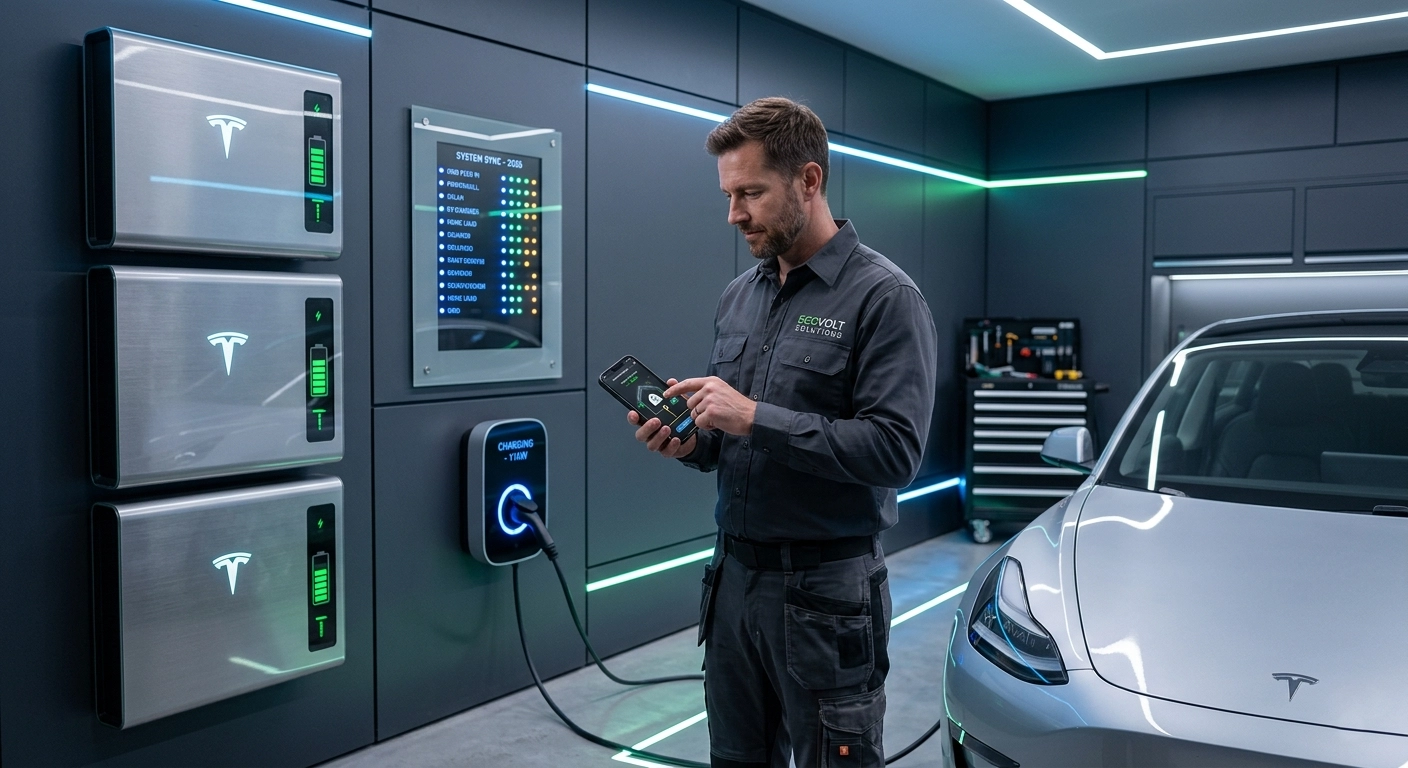
No other home service trade has anything like this. Plumbers are not getting a new appliance category. HVAC contractors are not seeing a wave of homeowners who need a brand-new type of equipment installed. But electricians are — because every electric vehicle sold needs a Level 2 charger at home, and that charger needs a licensed electrician to install it.
The numbers are not subtle. EV sales are climbing year over year, and every one of those vehicles eventually drives home to a garage that does not have a 240-volt outlet. That homeowner searches "EV charger installer near me" — and the electrician who shows up first on Google gets a $1,500 to $3,000 job.
But the real money is not the charger itself. It is what the charger reveals.
The panel upgrade pipeline: Most homes built before 2000 have 100-amp or 150-amp panels. A Level 2 EV charger on a 50-amp dedicated circuit often pushes the home past its panel capacity. That means the $1,500 charger install becomes a $5,000 to $8,000 job once you add the 200-amp panel upgrade, new dedicated circuit, and permit.
What to do now:
- Build a dedicated EV charger page on your website targeting "[city] EV charger installation" and "[city] Level 2 charger installer." Include costs, the permit process, and which utility rebates are available in your area.
- Stock the common hardware. NEMA 14-50 outlets, hardwired ChargePoint or Tesla Wall Connector units, the 50-amp breakers. Fast turnaround wins the job.
- Guide the review. After every EV install, ask the customer to mention the charger brand, the panel situation, and whether a permit was pulled. These keyword-rich reviews compound fast.
- Photograph every install. A wall-mounted Level 2 charger in a clean garage is the most photogenic job in electrical. Post it everywhere.
2Smart Electrical Panels: The Premium Upsell Most Homeowners Do Not Know Exists Yet
Traditional breaker panels do one thing: distribute power and trip when a circuit overloads. Smart electrical panels — Span, Lumin, Schneider Square D Energy Center — do everything else. They monitor energy usage circuit by circuit, integrate with solar and battery systems, allow remote control from a phone app, and automatically manage loads during a grid outage.
Most homeowners have never heard of them. That is your first-mover advantage.
A standard 200-amp panel upgrade costs $3,000 to $5,000. A Span panel upgrade runs $8,000 to $15,000 installed. The margins are significantly better, the customer is typically more affluent, and the product itself generates word-of-mouth that basic panel work never will.
Why smart panels are a review goldmine:
A homeowner who gets a standard panel upgrade writes: "Got a new panel, everything works." A homeowner who gets a Span panel writes: "I can see every circuit's energy use on my phone, the panel automatically shifts power to essentials during an outage, and it integrates with our solar system. Best upgrade we've made to this house."
That second review is the kind that attracts every premium buyer in your market — the Tesla owner, the solar adopter, the homeowner who just spent $50,000 on a kitchen remodel and wants their electrical to match.
What to do now:
- Get certified. Span, Lumin, and Schneider all have installer certification programs. Get listed in their installer directories — that alone generates leads.
- Build a dedicated page: "Smart Electrical Panels in [City]: What They Do, What They Cost, and Whether Your Home Qualifies."
- Show it working. Film a 90-second walkthrough of the Span app showing real-time circuit monitoring. Post it on your Google Business Profile and social channels.
- Target the right customer. Smart panel buyers are typically homeowners who already have solar, an EV, or both. Cross-reference your EV charger customer list — those are your first smart panel prospects.
3Whole-Home Battery Storage: Turning One Job Into a Long-Term Service Relationship
Tesla Powerwall. Enphase IQ Battery. Generac PWRcell. Franklin WH. The residential battery storage market is growing fast, and every one of these systems needs a licensed electrician to install it.
A whole-home battery install runs $12,000 to $25,000 depending on capacity and configuration. That makes it one of the highest-ticket residential electrical jobs available — and the customer profile is exceptional. Battery buyers are typically planning-oriented, financially stable homeowners who research extensively before calling. They read every review on your profile before they reach out.
But here is the real business play: battery storage creates a recurring service relationship. Unlike a panel upgrade or rewiring job where the customer may not call you again for years, a battery system needs monitoring, firmware updates, warranty coordination, and eventual cell replacement. You are not selling a one-time installation. You are selling an ongoing relationship.
What to do now:
- Get manufacturer-certified. Tesla, Enphase, and Generac all require installer certification to be listed in their directories and to honor equipment warranties. These certifications are lead-generation tools — homeowners searching "Tesla Powerwall certified installer [city]" are ready to buy.
- Pair with solar. If you are not a solar installer yourself, partner with one. The electrician who can handle both the battery and the critical loads panel in a single visit wins over the homeowner who does not want to coordinate three different contractors.
- Build the content. Create a page targeting "home battery installation [city]" covering: how much backup time different systems provide, which loads to prioritize, the federal tax credit (30% through the IRA), and your local utility's net metering or time-of-use rate structure.
- Capture the review language. Ask battery customers to mention the specific system, the backup capacity, and how it performed during the last outage. "Our Powerwall kept the lights, fridge, and internet running for 14 hours during the storm" is the review that sells the next ten installs.
4The Energy Audit Opportunity: Position Yourself as the Electrical Efficiency Expert
Most electricians think of themselves as installers and fixers. The contractors earning premium rates in 2026 are positioning themselves as energy consultants — and the tools to do it are already in your truck.
A residential energy audit identifies where a home is wasting electricity: overloaded circuits running inefficiently, outdated lighting drawing three times the power of LED replacements, phantom loads from un-switched outlets, aging appliances on undersized circuits, and panel configurations that do not match how the home actually uses power.
You do not need to become a full BPI-certified energy auditor to offer this. You need a thermal camera (which many electricians already carry), a circuit-level load analysis process, and the ability to translate what you find into a clear report the homeowner can act on.
Why this matters for your business:
- It is a premium service. A basic electrical energy assessment can command $200 to $500 as a standalone service. More importantly, it generates a prioritized list of upgrade recommendations — panel upgrades, dedicated circuits, LED conversions, smart panel installs — that turn into $5,000 to $15,000 in follow-up work.
- It creates content. Every audit produces thermal images, load data, and findings you can turn into Neighborhood Showcase articles and visual content. "We found this 1970s panel running at 95% capacity with aluminum wiring connections" — with a thermal image — is content that stops homeowners mid-scroll.
- It attracts the right customer. The homeowner who books an energy audit is planning-oriented, values expertise over price, and is likely to approve recommended upgrades. These are your highest-margin clients.
What to do now:
- Build a "Home Electrical Energy Assessment" service page targeting "[city] electrical energy audit."
- Create a simple one-page report template you can hand the homeowner at the end of every assessment.
- Price it to cover your time but position it as an investment: "The $300 assessment that finds $200/year in wasted electricity."
5The Digital-First Customer Experience: From Search to Review in Under 48 Hours
The homeowner hiring you in 2026 has already booked a restaurant through an app, scheduled a doctor visit online, and ordered a replacement light fixture on Amazon — all before lunch. If your intake process involves a voicemail box and a handwritten invoice, you are losing jobs to the competitor who sends a booking confirmation text within 30 seconds.
This is not about technology for its own sake. It is about removing every friction point between the moment a homeowner finds you on Google and the moment they leave a detailed review. Every unnecessary step — every callback wait, every paper form, every "we will email the invoice next week" — is a leak in your pipeline.
What to do now:
- Enable online scheduling. Tools like Housecall Pro, ServiceTitan, or Jobber let customers book without calling. For EV charger installs and panel upgrades where the scope is predictable, this eliminates the back-and-forth entirely.
- Automate updates. Send appointment confirmations and "your electrician is on the way" notifications by text. This single step eliminates the most common source of negative reviews: the feeling of being forgotten.
- Go digital on payments. Tap-to-pay, card on file, digital invoicing sent before the electrician leaves the driveway. Close the payment loop on-site so the customer experience ends on a high note, not with an awkward billing follow-up.
- Trigger the review request within two hours. Automate a text with your direct Google review link while the experience is fresh. Include a prompt: "If you have a minute, mentioning the specific work we did — like the panel upgrade or EV charger install — really helps other homeowners find a licensed electrician they can trust."
- Follow up with purpose. Day 1: review request. Day 3: thank-you with a safety tip relevant to the work performed. Day 30: check-in asking if everything is still working as expected.
The electrician with the smoothest digital experience does not just collect more reviews — they collect better reviews. Customers notice when a process feels modern and professional, and they say so publicly.
6How Premium Service Reviews Attract Premium Customers
Here is the compounding play that ties everything in this guide together: the reviews you collect from premium services attract more premium customers.
A Google Business Profile filled with reviews about outlet replacements and light switch installs tells future customers one thing — you handle small jobs. There is nothing wrong with that work, but it does not attract the homeowner researching a $10,000 smart panel upgrade or a $15,000 battery storage installation.
Now imagine a profile where recent reviews say:
- "They installed a Span smart panel and integrated it with our Tesla Powerwall. I can monitor every circuit from my phone."
- "Upgraded our panel from 100 to 200 amps and installed a Level 2 ChargePoint charger — pulled the permit, passed inspection on the first try."
- "They did a full energy assessment, found our 1960s panel was dangerously overloaded, and rewired the entire first floor. Insurance company is happy now."
Every one of those reviews is a signal to the next premium buyer that you operate at their level. The homeowner who just bought a Tesla is not calling the electrician with reviews about ceiling fan installs. They are calling the electrician whose reviews mention EV chargers, smart panels, and code compliance.
How to build this review profile deliberately:
- After every EV charger, smart panel, or battery install, personally ask for a review that mentions the specific product, the scope of work, and the inspection result.
- Repurpose these reviews across channels — website case studies, social media screenshots, sales presentation materials.
- Respond to every premium review with details: "Glad the Span panel integration with your solar system is working perfectly. That real-time monitoring is a game-changer for managing your energy costs."
The electricians who stack premium service reviews now will own the local search results for every high-ticket keyword in their market. Everyone else will still be competing on price for $150 outlet installs.